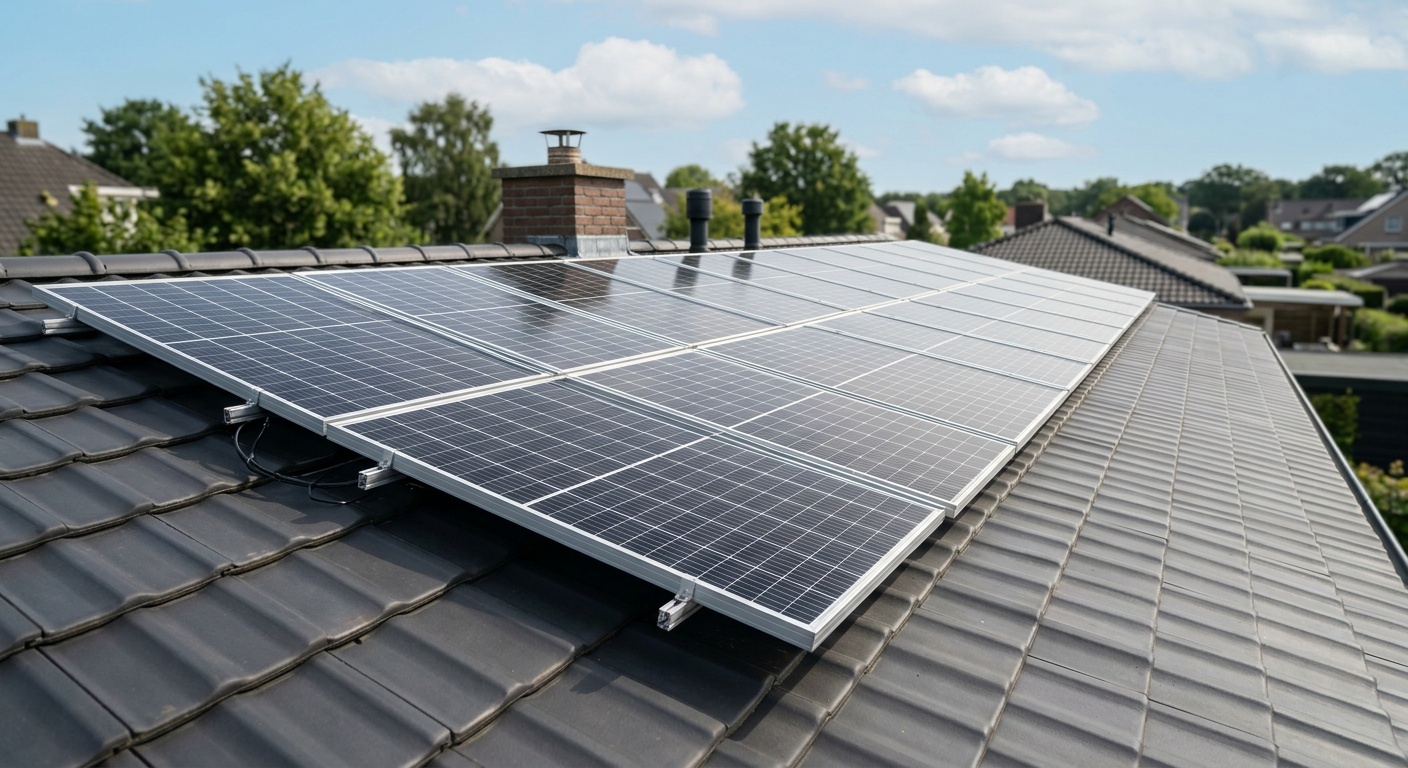
How Much Do Solar Panels Add to Your House Value
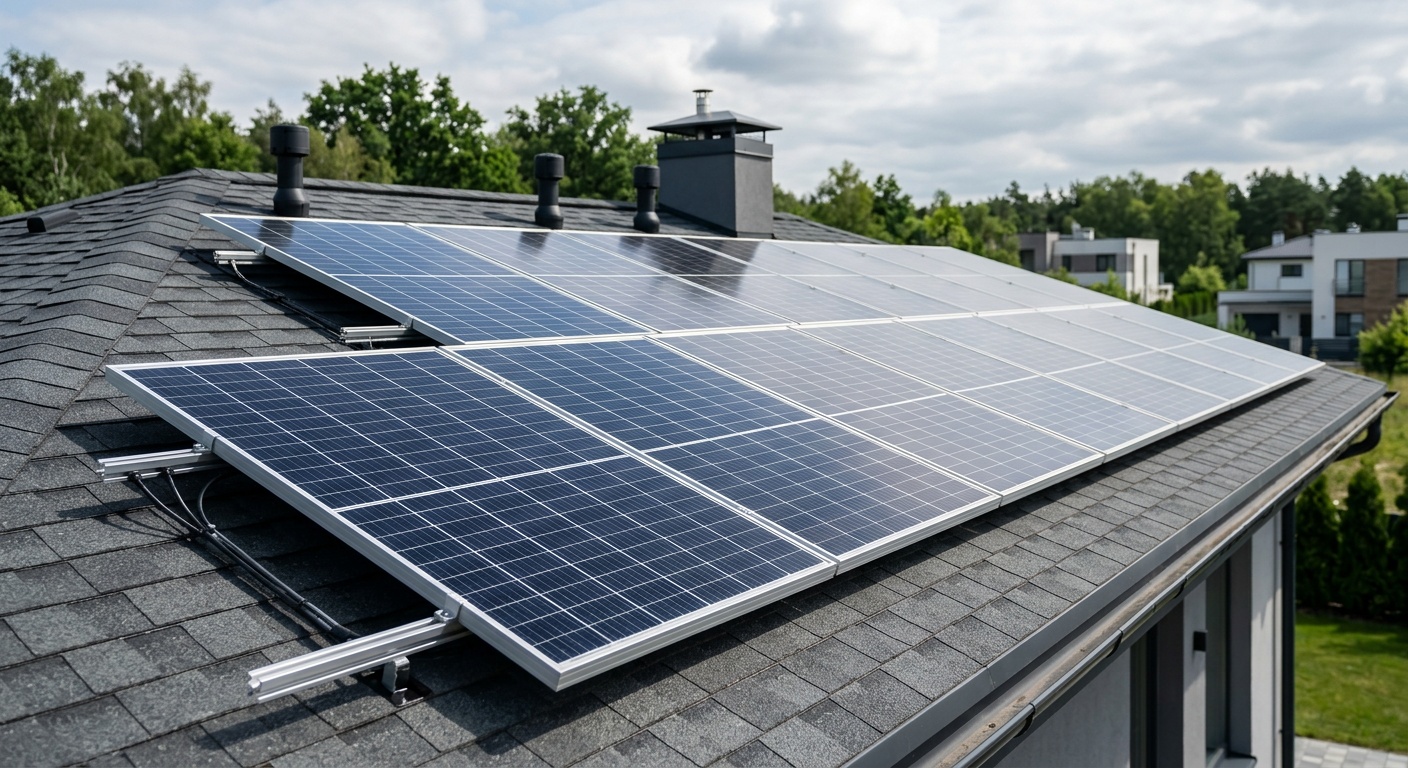
How Much Do Solar Panels Add to Your House Value in 2026?
Reading time: 12 minutes
Here’s a question that every homeowner considering solar is quietly asking: “Will this actually pay off when I sell?” It’s one thing to save on monthly electricity bills. It’s another thing entirely to know whether those panels bolted to your roof are quietly building equity — or quietly becoming a liability.
The straight talk? In 2026, solar panels are one of the most strategically sound home improvements you can make — if you understand how the math actually works. This isn’t a simple “yes, solar adds value” article. We’re going to break down the real numbers, the regional nuances, the financing traps, and the scenarios where solar might not perform as expected.
Let’s turn complexity into clarity.
Table of Contents
- The Baseline: What the Research Actually Says in 2026
- Key Factors That Determine Your Solar Value Premium
- Real-World Examples: Three Homeowner Stories
- Solar Value Premium by Region: A Visual Breakdown
- Comparing Solar ROI to Other Home Improvements
- Common Challenges and How to Navigate Them
- Practical Tips to Maximize Solar’s Impact on Resale Value
- Frequently Asked Questions
- Your Solar Value Roadmap: Next Steps
The Baseline: What the Research Actually Says in 2026
Let’s start with numbers. According to a Zillow research update published in early 2026, homes with solar panel systems sell for an average of 4.1% more than comparable homes without solar. On a $400,000 home, that’s roughly $16,400 in added value — not pocket change.
The National Renewable Energy Laboratory (NREL) has long used its “$3-per-watt rule of thumb” — suggesting that for every watt of solar capacity installed, home value increases by approximately $3. A standard 8-kilowatt system (common for mid-size American homes in 2026) would therefore add roughly $24,000 in value under this model.
But here’s where it gets nuanced. These are averages. Your actual premium depends heavily on:
- Whether you own the system outright or are leasing it
- The age and condition of the panels
- Your local electricity rates and utility policies
- Buyer awareness and demand in your specific market
- The size and efficiency of your installation
According to Lawrence Berkeley National Laboratory’s 2025 “Tracking the Sun” report, owned solar systems added a median premium of approximately $4 per watt in high-demand markets like California and Massachusetts — while premiums in less solar-saturated markets hovered closer to $2 to $2.50 per watt. The gap is real, and it matters enormously to your planning.
Why 2026 Is a Pivotal Year for Solar Home Value
Several converging trends make 2026 particularly interesting for solar homeowners. First, the U.S. federal solar Investment Tax Credit (ITC) remains at 30% through 2032 under the Inflation Reduction Act, meaning new buyers can still access significant financial incentives — which keeps buyer demand for solar homes robust. Second, average residential electricity rates in the U.S. reached $0.163 per kWh as of Q1 2026 (per the U.S. Energy Information Administration), up from $0.158 in 2025. Higher electricity costs make solar savings more tangible, which translates directly into appraisal value.
Third, and perhaps most importantly, solar panel technology has matured. A system installed in 2026 uses panels with efficiency ratings commonly between 21% and 23% for premium monocrystalline options — compared to 17–19% just five years ago. More efficient panels mean more savings, which means more value to transfer to a buyer.
The Appraisal Problem: Why Solar Is Still Undervalued by Some Appraisers
Here’s a challenge most solar guides skip over: not all appraisers know how to value solar correctly. Traditional home appraisal methods rely on comparable sales (“comps”), and in markets where solar adoption is still growing, there simply aren’t enough solar-equipped comps to establish a precise premium. This can lead to appraisers undervaluing your system — sometimes significantly.
The Appraisal Institute updated its guidance in 2024 to encourage appraisers to use the Income Approach for solar valuation — calculating the present value of future electricity savings. But implementation remains inconsistent. If you’re planning to sell, proactively preparing documentation of your system’s output, savings history, and warranty status can make a meaningful difference in how your home gets appraised.
Key Factors That Determine Your Solar Value Premium
Think of solar value as a formula with several variables. Get the variables right, and the premium compounds. Get them wrong, and you could actually reduce buyer interest.
Ownership vs. Leasing: The Single Biggest Factor
If there’s one thing to understand clearly, it’s this: owned solar systems add value; leased systems can complicate a sale. When you own your panels outright (or have a paid-off solar loan), the added value is unambiguous — a buyer takes over a home with lower electricity costs and no additional monthly obligation.
Leased systems, on the other hand, involve a third-party company that retains ownership of the panels. The lease (typically 20–25 years) transfers to the new buyer, who must qualify for it. Some buyers balk at this additional financial commitment, even if the economics are favorable. In competitive markets in 2026, listings with leased solar are selling at smaller premiums — or sometimes requiring price reductions to move quickly.
Pro Tip: If you currently have a solar lease and are planning to sell within three to five years, explore whether buying out the lease makes financial sense. Many solar lease agreements include a buyout option, and the math often favors ownership as panel costs continue to decline.
System Age and Condition
Solar panels are incredibly durable — most carry 25-year performance warranties — but age still matters to buyers and appraisers. A 2-year-old system commands a higher premium than a 15-year-old one, even if both are functioning perfectly. Why? Remaining warranty life, anticipated maintenance needs, and the efficiency gap between older and newer panel generations all play a role.
In 2026, a system installed in 2010–2012 using first-generation polycrystalline panels is now 14–16 years old. While still functional, these systems are nearing the midpoint of their design life and appraise differently than modern installations. If you’re selling with an older system, providing a recent professional inspection report demonstrating performance metrics can help close the credibility gap.
Local Electricity Rates and Net Metering Policies
Solar’s value proposition is fundamentally about energy savings. The higher your local electricity rate, the more valuable those savings are — and the higher the premium buyers will pay. States like California, Hawaii, Connecticut, and Massachusetts, with some of the nation’s highest utility rates, consistently show the strongest solar premiums.
Net metering policies also matter significantly. States with robust net metering allow homeowners to sell excess solar energy back to the grid at favorable rates, increasing annual savings. In 2026, several states — including California (under NEM 3.0) and Nevada — have revised their net metering rules in ways that slightly reduce export compensation, which has modestly dampened premiums in those specific markets. Understanding your state’s current policy is essential to setting realistic expectations.
Real-World Examples: Three Homeowner Stories
Case Study 1: The California Equity Windfall
Maria and David, homeowners in Sacramento, California, installed a 10 kW owned system in 2022 for approximately $28,000 after the federal tax credit. By the time they listed their home in early 2026, their Zillow estimate had risen substantially. Their real estate agent commissioned an independent solar appraisal, and the appraiser applied the income approach — calculating that their system’s average annual savings of $2,400 translated to a present-value addition of approximately $22,000 to their home’s market price.
Their home sold for $618,000 — roughly $19,000 above the non-solar comparable sales in their neighborhood. When they subtracted their net system cost (after tax credits and four years of electricity savings), they calculated a total financial benefit of over $30,000 from their solar investment. Not a bad return on a home improvement project.
Case Study 2: The Leased System Complication
James, selling a 3-bedroom home in Phoenix, Arizona, had a leased solar system with 11 years remaining on the contract. His real estate agent listed the home emphasizing the solar “benefit,” but three prospective buyers backed out during due diligence when they learned they’d need to assume the lease agreement and qualify with the solar company. The home sat on the market for 47 days — significantly longer than the Phoenix average of 28 days at that time. James eventually found a buyer, but negotiated a $4,500 price reduction to offset the buyer’s perceived risk of the lease assumption.
The lesson: Transparency early in the process and proactively educating buyers about lease terms can significantly reduce friction. Working with an agent experienced in solar transactions is genuinely worth the effort.
Case Study 3: The Midwest Modest Premium
Linda, selling a home in Columbus, Ohio, owned a 6 kW system installed in 2023. Ohio’s electricity rates are below the national average at approximately $0.128 per kWh as of 2026. The solar premium she received was real but modest — approximately $8,500 above comparable non-solar homes. Her system cost $15,500 net of tax credits, so she didn’t fully recoup the installation cost in the sale price alone. However, when she added up four years of electricity savings totaling approximately $3,200, her total return was closer to $11,700 on a $15,500 investment — still a solid 75% return, with ongoing environmental benefits factored in separately.
This case illustrates an important truth: solar ROI isn’t just about resale premium. The combination of energy savings during ownership plus resale premium is the complete picture.
Solar Value Premium by Region: A Visual Breakdown
The following chart illustrates estimated average solar home value premiums by region in 2026, based on aggregated data from Lawrence Berkeley National Laboratory, Zillow Research, and the National Association of Realtors.
Average Solar Home Value Premium by U.S. Region (2026)
Sources: LBNL, Zillow Research, NAR — 2026 aggregated data
Comparing Solar ROI to Other Home Improvements
Context matters. To truly evaluate solar as a home value investment, it helps to compare it against other popular upgrades homeowners consider before selling.
| Home Improvement | Avg. Cost (2026) | Avg. Value Added | ROI % | Utility Benefits? |
|---|---|---|---|---|
| Solar Panel System (8kW, owned) | $18,000–$24,000 | $20,000–$28,000 | ~104% | Yes (energy savings) |
| Kitchen Remodel (major) | $70,000–$85,000 | $45,000–$55,000 | ~67% | No |
| Bathroom Addition | $35,000–$50,000 | $27,000–$38,000 | ~77% | No |
| Garage Door Replacement | $4,500–$6,500 | $4,200–$6,000 | ~93% | No |
| Home Battery Storage (paired with solar) | $10,000–$14,000 | $8,000–$13,000 | ~88% | Yes (grid resilience) |
Data compiled from Remodeling Magazine’s 2026 Cost vs. Value Report, NREL, and Zillow Research.
The standout insight from this comparison? Solar is one of the very few home improvements where the value added to your home can actually exceed the net cost of installation — especially when you account for ongoing energy savings during the ownership period. Most renovations are essentially presale investments that recoup a portion of their cost. Solar can functionally pay for itself and then some.
Common Challenges and How to Navigate Them
Challenge 1: Buyer Skepticism and Education Gaps
Not every buyer understands solar, and confusion can kill deals. Some buyers fear maintenance complexity, worry about roof damage, or have heard anecdotal horror stories about leased systems. The solution isn’t to hide solar complexity — it’s to over-prepare your documentation.
Before listing, assemble a “Solar Information Package” that includes: your system’s monitoring data (most modern inverters provide app-based dashboards with historical production data), your annual electricity bills showing savings, warranty documentation, the installation company’s current service status, and a one-page summary explaining how the system works for a potential buyer. An informed buyer is a confident buyer.
Challenge 2: The Appraisal Gap
As mentioned earlier, inconsistent appraiser training remains a real issue in 2026. If your appraisal comes in low because the appraiser didn’t properly account for solar value, you have options. You can formally request that the appraiser use the PV Value tool — a free, NREL-developed software that calculates solar system value using the income approach. You can also provide comparable sales data from solar-equipped homes in your area and ask your real estate agent to connect you with an appraiser who holds a Residential Solar Appraisal credential.
In competitive markets, some sellers are proactively ordering their own pre-listing solar appraisal to set accurate pricing expectations and provide buyers with credible valuation documentation upfront.
Challenge 3: Roof Condition Concerns
A solar installation on an aging or damaged roof is a legitimate buyer concern. If your roof is more than 15 years old and you’re planning to install solar, seriously consider replacing or refreshing the roof first. Combining a roof replacement with solar installation is also a more cost-effective approach — many contractors offer package pricing, and it’s far cheaper to do it together than to de-install panels later for a roof replacement. In 2026, several manufacturers offer solar roof tile systems (like the Tesla Solar Roof and competitors) that integrate panels into the roofing material itself — an elegant solution that eliminates this concern entirely, though at a higher upfront cost.
Practical Tips to Maximize Solar’s Impact on Resale Value
- Own, don’t lease. If at all financially possible, own your system outright or use a solar loan. The resale complexity of transferred leases consistently reduces buyer confidence and negotiating power.
- Size appropriately. A system sized to cover 90–100% of your electricity use is the sweet spot. Over-sizing (producing far more than you use) may not yield proportional value increases if net metering compensation is limited in your state.
- Add battery storage strategically. In 2026, pairing solar with a home battery (like a Tesla Powerwall 3 or Enphase IQ Battery 5P) adds resilience value that resonates strongly with buyers in markets experiencing frequent outages. This combination adds meaningful premium beyond solar alone.
- Maintain performance records. Keep annual production data from your system’s monitoring app. A well-documented production history is compelling evidence of system health and real-world savings.
- Work with a solar-savvy real estate agent. In markets with significant solar penetration, some agents specialize in solar home transactions. They know how to position the system in listings, educate buyers, and navigate appraisal conversations effectively.
- Time your sale strategically. Listing in spring and early summer — when buyers are actively thinking about energy costs and air conditioning bills — can help make solar’s value proposition more viscerally compelling.
- Highlight EV charging compatibility. If your solar system is paired with or capable of supporting an EV charging setup, this is an increasingly valuable feature in 2026 as EV adoption continues its upward trajectory. Mentioning this capability in listings resonates with a growing buyer demographic.
Frequently Asked Questions
Do solar panels always increase home value, or can they ever decrease it?
In the vast majority of cases, owned solar systems increase home value — especially in markets with high electricity rates and strong buyer awareness. However, there are specific scenarios where solar can complicate a sale: leased systems with unfavorable terms, very old or poorly maintained panels, systems installed by defunct companies (raising service concerns), or solar installations in markets where buyers have little familiarity with the technology. In these cases, the impact may be neutral or mildly negative. The key variables are ownership structure, system condition, and local market literacy. In 2026, as solar adoption has crossed mainstream thresholds in most U.S. markets, these negative scenarios are increasingly rare.
How do I find out the current market value of my specific solar system?
The most reliable method is to hire an independent appraiser who uses the income approach and is familiar with solar valuation. You can also use the free PV Value tool (available through the Sandia National Laboratories website), which calculates present value based on your system’s production data, local electricity rates, and remaining panel life. For a quick estimate, use the $3–$4 per watt rule as a starting point, then adjust based on your region’s premium levels (refer to the regional chart above). Your solar installer may also be able to provide a system valuation letter, though this is understandably not independent.
Does adding solar panels affect my property taxes?
This varies significantly by state, but many U.S. states offer a solar property tax exemption — meaning that even if solar increases your home’s assessed value, you don’t pay additional property taxes on that value increase. As of 2026, over 35 states have some form of solar property tax exemption, though the specifics differ. States like California, Florida, Texas, New York, and Massachusetts all offer meaningful exemptions. Before installing, check your state’s specific policy and confirm with your local assessor’s office. This exemption effectively makes solar a “free upgrade” from a property tax perspective in many jurisdictions — adding value without adding annual tax burden.
Your Solar Value Roadmap: Making the Smart Move in 2026
Solar panels aren’t just an environmental statement anymore — in 2026, they’re a measurable, increasingly well-understood financial asset embedded in your home. Here’s your action-oriented roadmap to make the most of this opportunity:
- Assess your current situation. Do you own or lease? How old is your system? Pull your production data from the past 12 months and calculate your actual energy savings. This is your financial baseline.
- Research your local market premium. Look at recent sold listings in your area on Zillow, Redfin, or your MLS. Are solar-equipped homes selling at a premium? How quickly? Talk to a local real estate agent with solar experience.
- Optimize before selling. If your system is leased, evaluate a buyout. If your roof is aging, address it before it becomes a buyer objection. Consider whether battery storage makes sense given your local grid reliability and electricity rates.
- Document everything. Compile your Solar Information Package: warranties, production history, utility bill comparisons, and any relevant certifications or inspection reports.
- Engage the right professionals. A solar-credentialed appraiser and an agent experienced in solar transactions are not optional extras — they’re strategic assets that can directly impact your sale price and timeline.
The broader trend is unmistakable: as electricity costs continue climbing and climate resilience becomes an increasingly important homebuyer priority, solar’s value proposition will only strengthen in the years ahead. What was once a niche upgrade is now a mainstream value driver — and homeowners who understand how to position it correctly are capturing real financial rewards.
So here’s the question worth sitting with: If solar can genuinely add $15,000–$25,000 to your home’s value while simultaneously reducing your monthly bills and your carbon footprint, what’s actually stopping you from taking the next step today?